

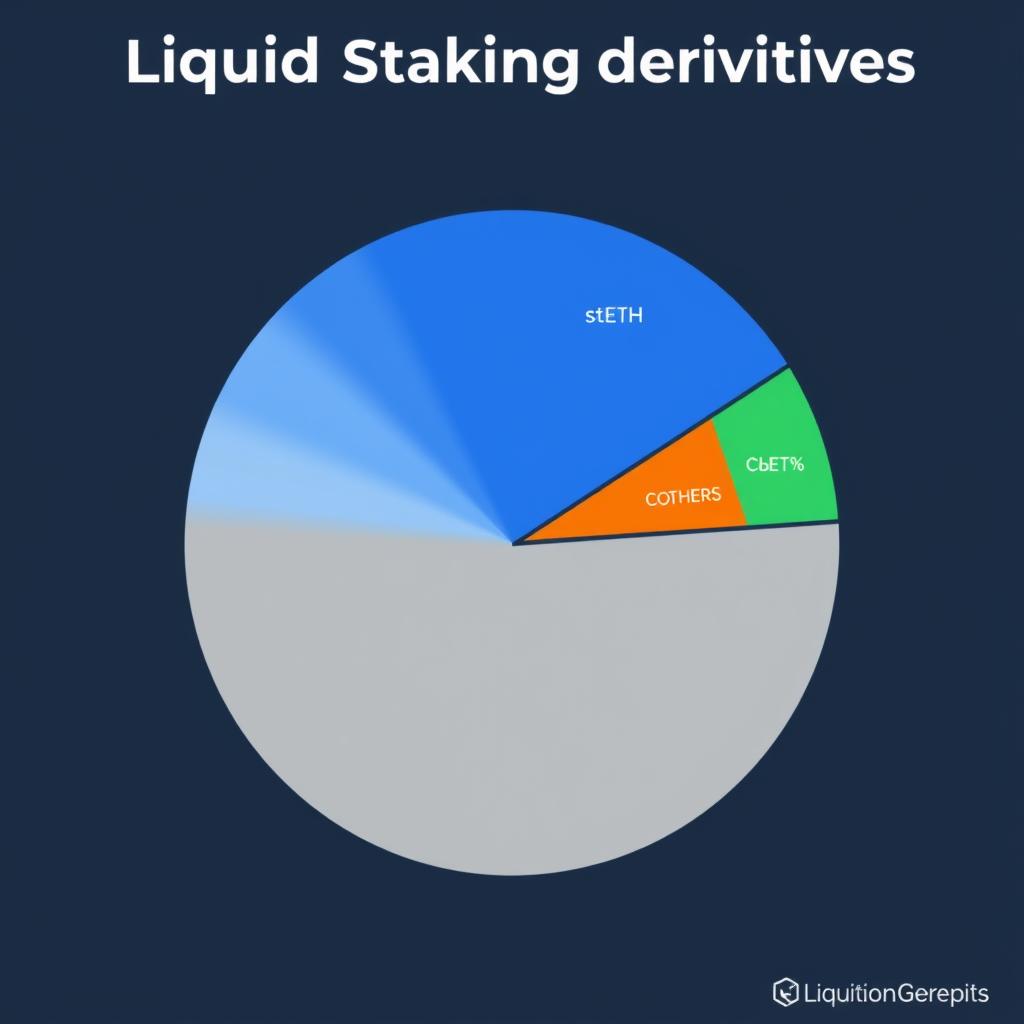
Lido Staked Ether (stETH) has revolutionized how investors participate in Ethereum’s proof-of-stake ecosystem. With over 32% of all staked ETH locked in Lido’s protocol, stETH has become the dominant force in liquid staking. This guide explains everything you need to know about stETH, from its fundamental mechanics to practical applications in your investment strategy.
What is Lido Staked Ether (stETH)?
Lido Staked Ether (stETH) is a token that represents staked ETH in the Lido protocol. When users deposit ETH into Lido, they receive stETH tokens on a 1:1 basis. These tokens represent both the initial deposit and the staking rewards that accumulate over time.
Unlike traditional staking which locks your assets, stETH allows you to maintain liquidity while still earning staking rewards. This innovative approach solves one of the biggest challenges in Ethereum staking – the inability to access your funds during the staking period.
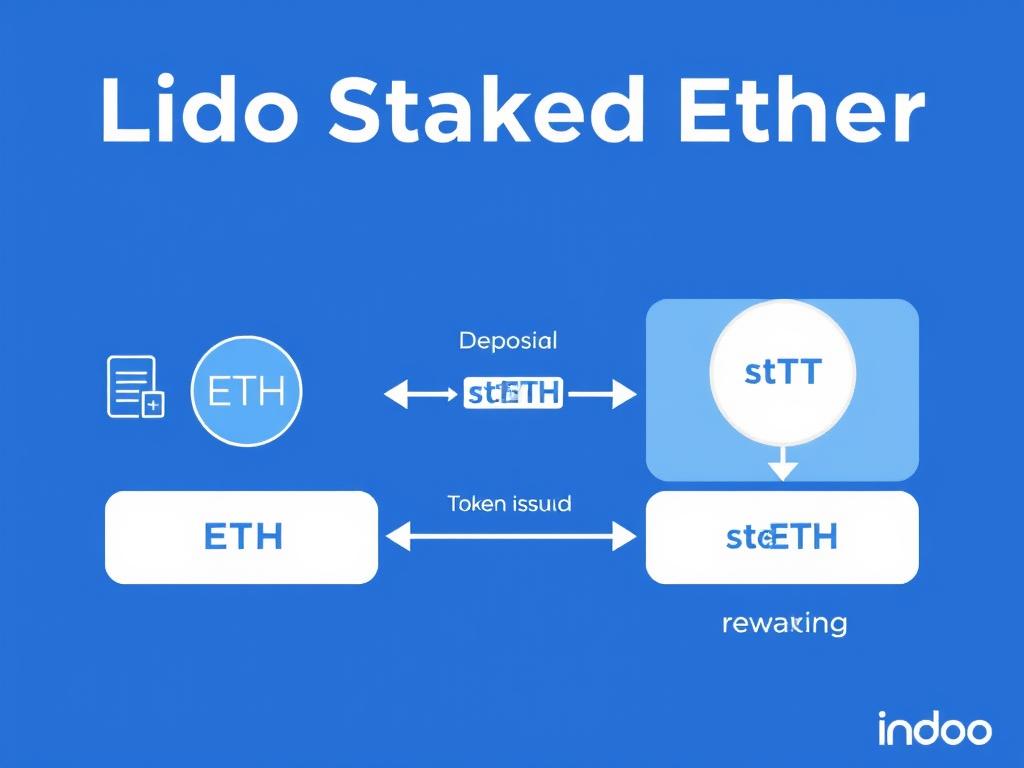
How Liquid Staking Works
Liquid staking through Lido works by pooling user deposits and staking them with professional validators. This approach offers several advantages over traditional staking:
- No minimum deposit (traditional staking requires 32 ETH)
- Tokens remain liquid and tradable
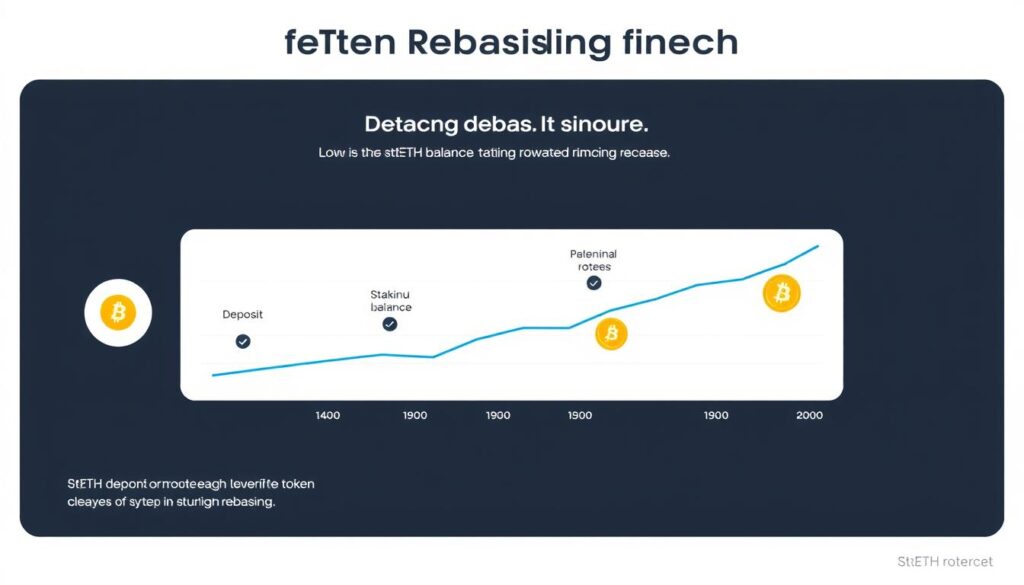
- Rewards accrue daily through rebasing
- Reduced technical complexity
- Shared validator risks
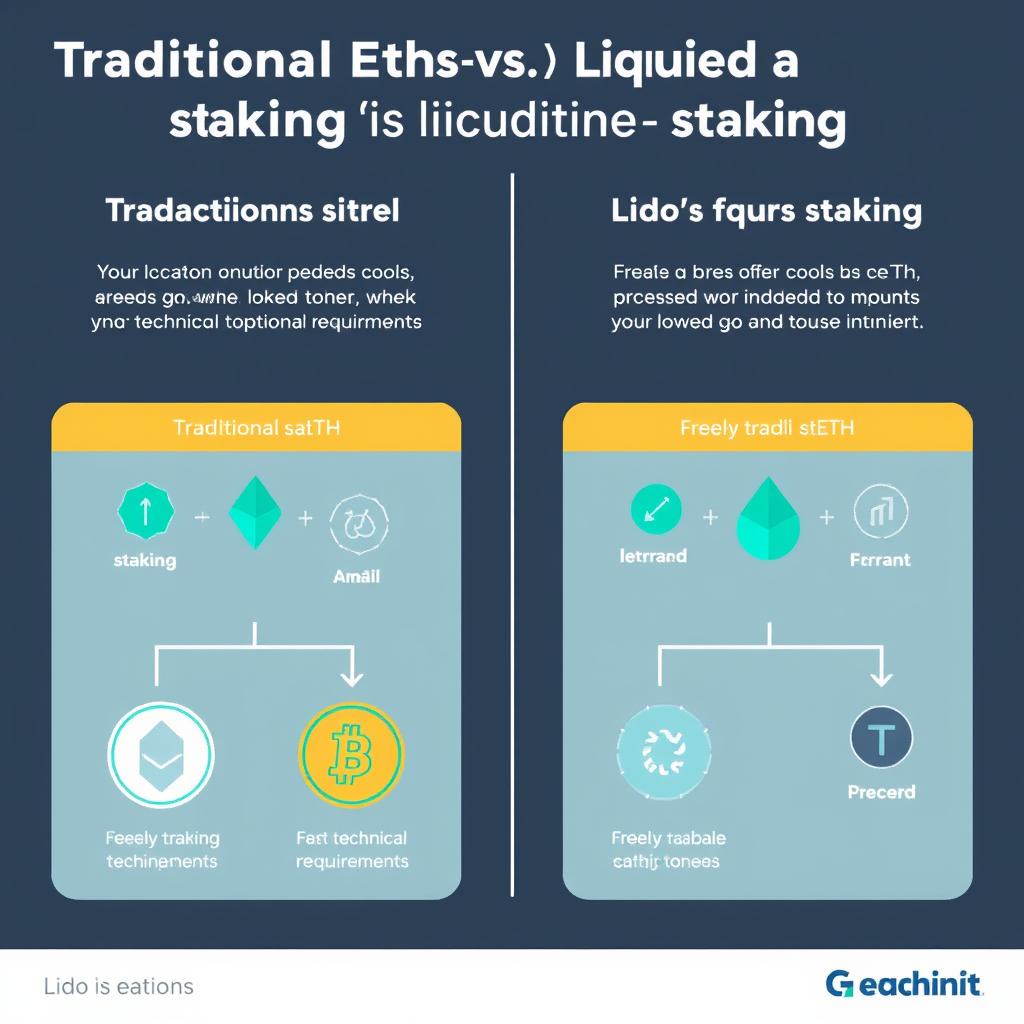
stETH Token Mechanics
stETH tokens have unique properties that differentiate them from standard ERC-20 tokens:
- Rebasing Mechanism: stETH balances increase automatically to reflect staking rewards
- 1:1 Representation: Each stETH represents an equivalent amount of staked ETH plus rewards
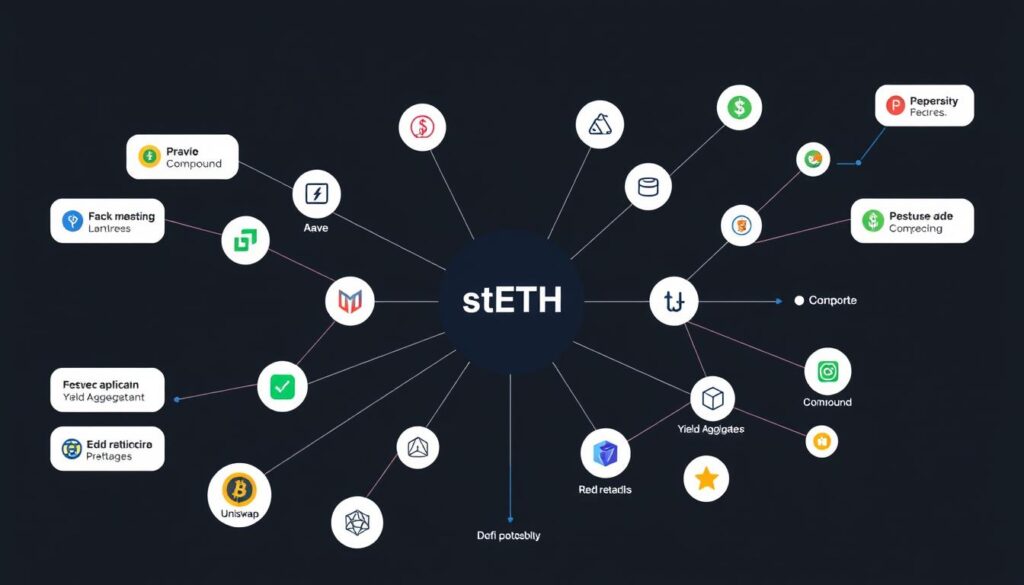
- ERC-20 Compatibility: Can be used across DeFi applications like any standard token
- Market-Determined Price: While designed to track ETH 1:1, market forces can cause slight deviations
Ready to start earning staking rewards?
Join over 240,000 users already staking with Lido and earn daily rewards on your ETH.
Step-by-Step: How to Stake ETH via Lido
Staking ETH through Lido is a straightforward process that requires minimal technical knowledge. Follow these steps to start earning staking rewards while maintaining liquidity.
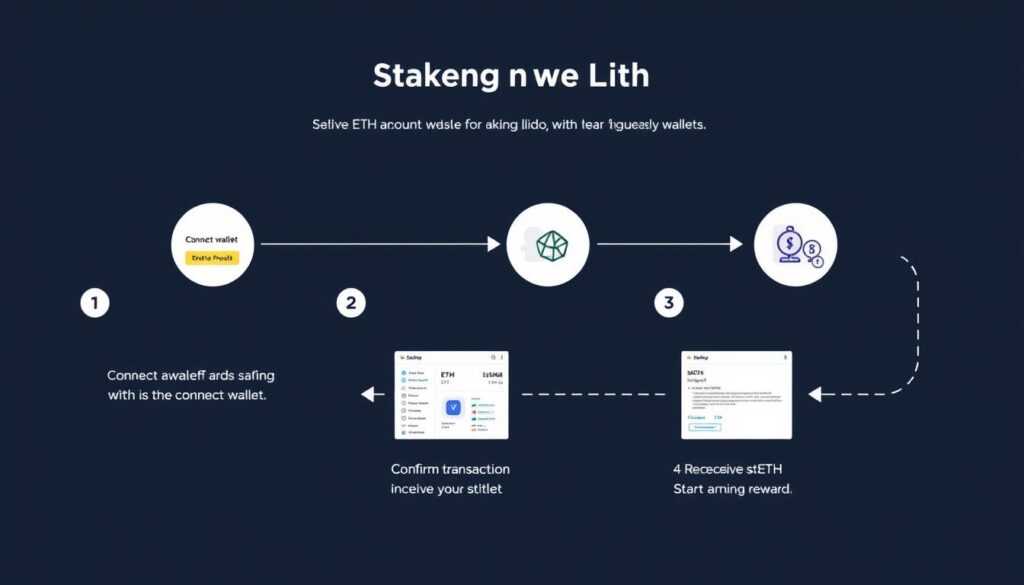
Wallet Setup Guide
- Set up a compatible wallet (MetaMask, Ledger, or other Ethereum wallets)
- Ensure you have ETH in your wallet (plus a small amount for gas fees)
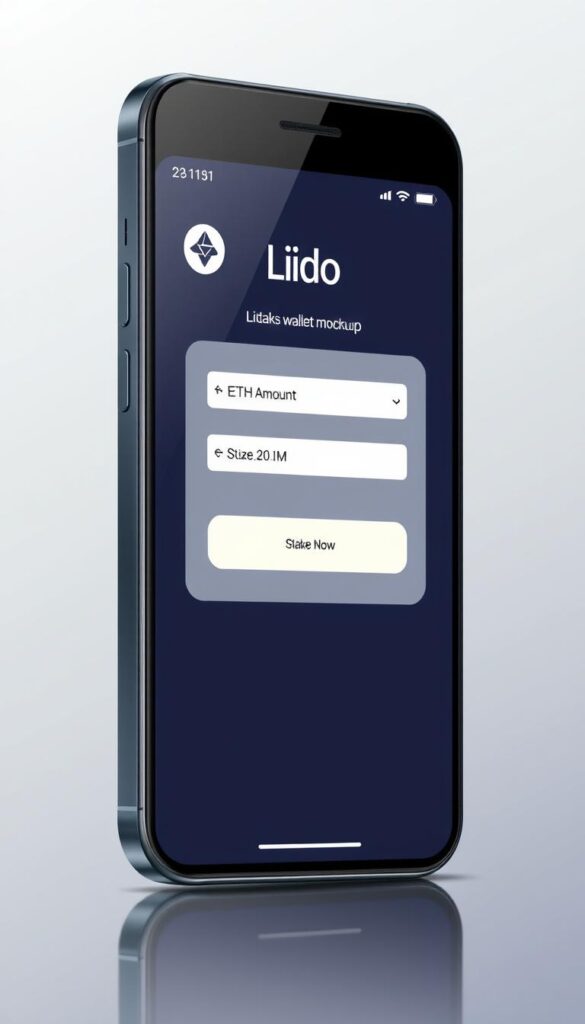
- Visit the official Lido staking page at stake.lido.fi
- Connect your wallet by clicking “Connect Wallet”
- Enter the amount of ETH you wish to stake
- Confirm the transaction in your wallet
- Receive stETH tokens in your wallet
Understanding Daily Rebase
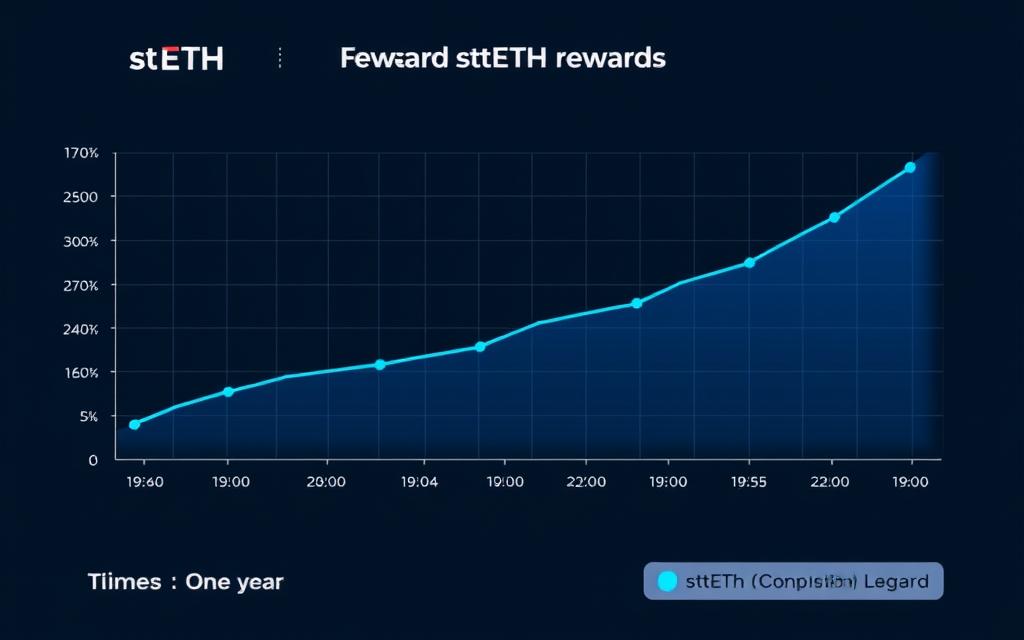
One of the unique features of stETH is its daily rebase mechanism. Unlike traditional staking where rewards are claimed manually, stETH automatically increases your token balance to reflect earned rewards.
| Day | Initial stETH | Daily APR | Reward | New Balance |
| 1 | 10.0000 | 0.01% | 0.0010 | 10.0010 |
| 2 | 10.0010 | 0.01% | 0.0010 | 10.0020 |
| 30 | 10.0290 | 0.01% | 0.0010 | 10.0300 |
| 365 | 10.3650 | 0.01% | 0.0010 | 10.3660 |
This example shows how a 10 stETH balance would grow over time with a hypothetical 0.01% daily APR (approximately 3.65% annual yield). Actual rates vary based on network conditions.
stETH vs Competitors: rETH, cbETH Compared
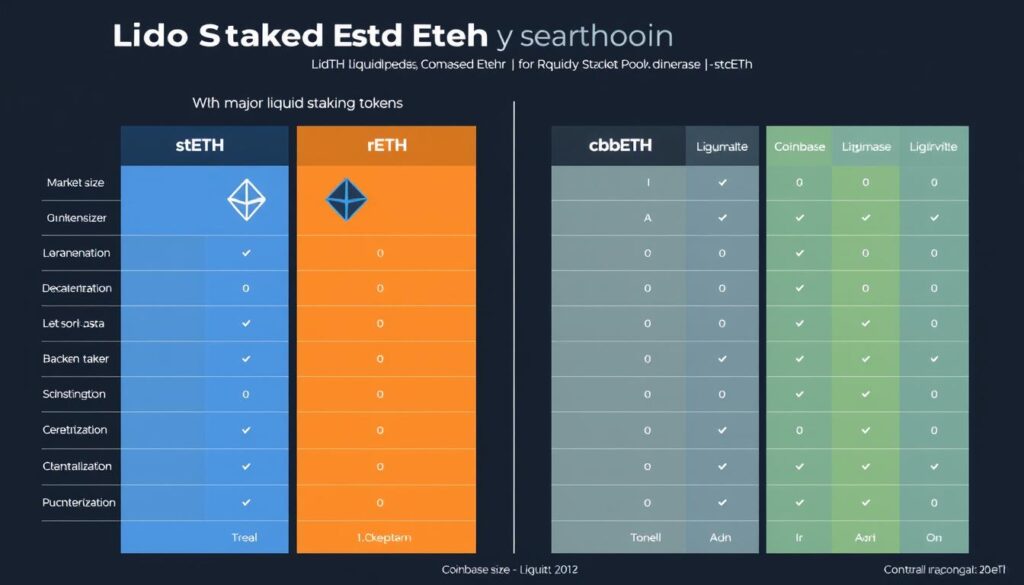
Lido’s stETH isn’t the only liquid staking derivative available. Understanding how it compares to alternatives like Rocket Pool’s rETH and Coinbase’s cbETH can help you make an informed decision.
Yield Comparison Table
| Feature | Lido (stETH) | Rocket Pool (rETH) | Coinbase (cbETH) |
| Current APR | 3.8% | 4.1% | 3.5% |
| Minimum Stake | Any amount | Any amount | Any amount |
| Decentralization | Medium (DAO governed) | High (distributed nodes) | Low (centralized) |
| Market Size | $35.3B | $4.2B | $2.8B |
| Reward Mechanism | Rebasing (balance increases) | Exchange rate (token appreciates) | Exchange rate (token appreciates) |
Note: APR figures are variable and subject to change based on network conditions. Data accurate as of June 2024.
Liquidity Analysis
Liquidity is a crucial factor when choosing a liquid staking solution. Higher liquidity means easier trading with less slippage and better price stability.
- stETH: Highest trading volume ($155M daily) and deepest liquidity pools
- rETH: Growing liquidity but significantly less than stETH
- cbETH: Good liquidity on centralized exchanges, limited in DeFi
- Impact: Higher liquidity typically means lower slippage and easier entry/exit
Compare staking options yourself
Use our interactive calculator to see which liquid staking solution offers the best returns for your specific situation.
Trading stETH: Top Platforms & Strategies
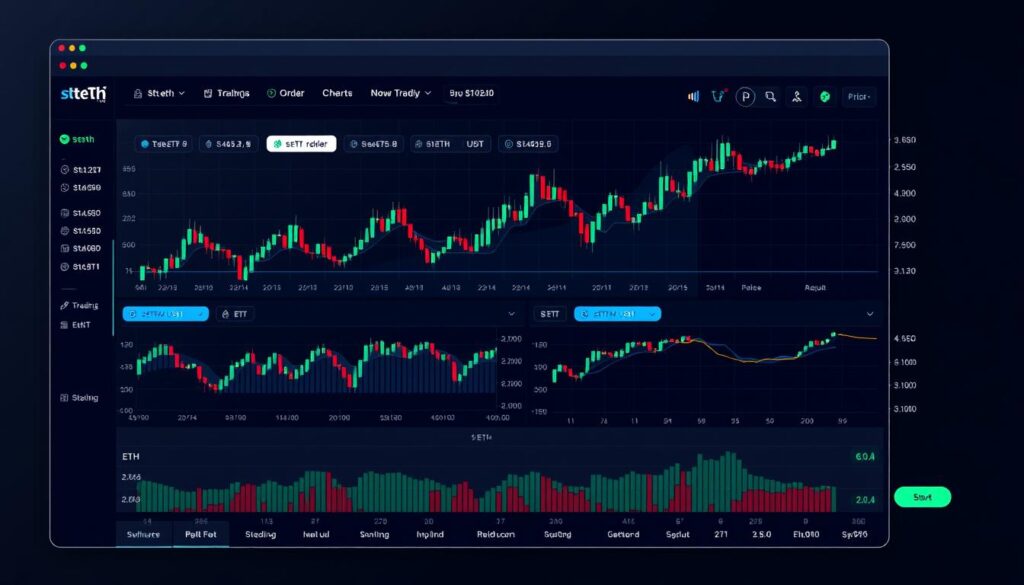
Whether you’re looking to acquire stETH or trade your existing holdings, understanding the available platforms and their characteristics is essential for optimal execution.
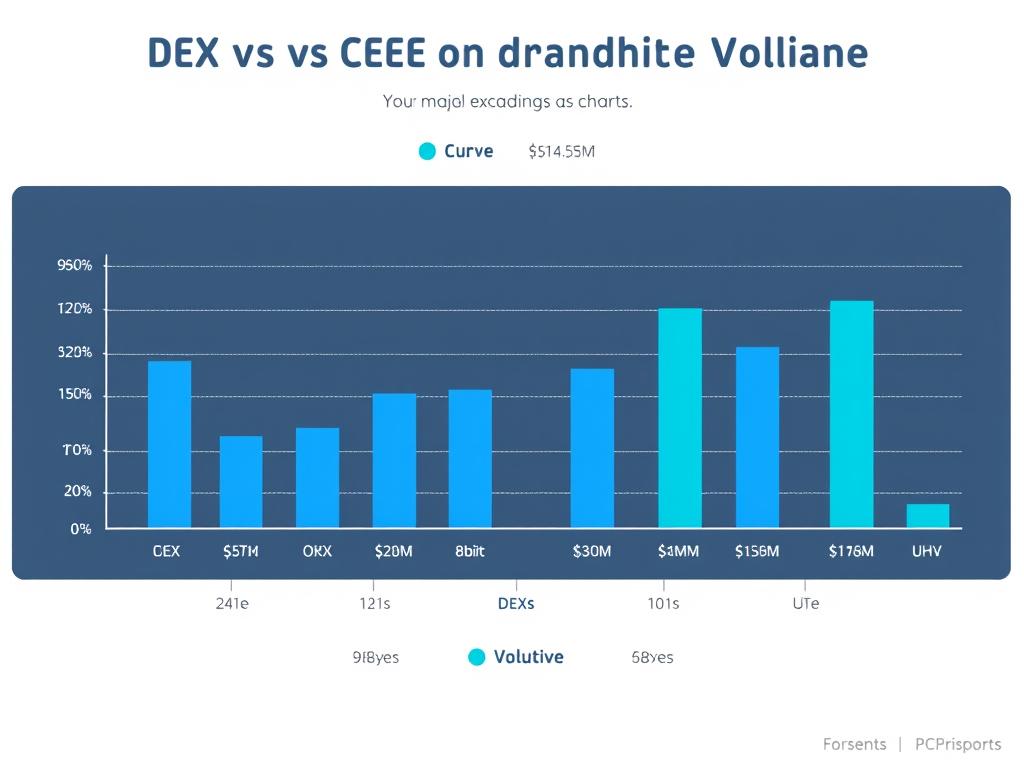
DEX vs CEX Liquidity Pools
Decentralized Exchanges (DEXs)
- Curve Finance: Largest stETH liquidity (~$61.5M daily volume)
- Uniswap: Good liquidity with multiple trading pairs
- Balancer: Offers weighted pools with stETH
- Benefits: No KYC, direct wallet trading, composability with other DeFi protocols
Centralized Exchanges (CEXs)
- Bybit: High volume stETH/USDT pair (~$16.5M daily)
- OKX: Significant liquidity (~$19.5M daily volume)
- Bitget: Growing stETH markets
- Benefits: Higher liquidity, easier fiat on-ramps, limit orders
Tax Implications
Trading and holding stETH may have specific tax implications that differ from standard cryptocurrency transactions. Consider these key points:
- Rebasing Events: Daily stETH balance increases may be considered taxable income in some jurisdictions
- Trading: Exchanging stETH for other cryptocurrencies typically triggers capital gains tax events
- DeFi Activities: Using stETH in lending protocols or liquidity pools may create complex tax situations
- Record-Keeping: Maintain detailed records of all stETH transactions and balance changes
Note: Tax regulations vary by country. Consult with a tax professional familiar with cryptocurrency taxation in your jurisdiction.
| Exchange | Type | Trading Pairs | 24h Volume | Fees |
| Curve Finance | DEX | stETH/ETH | $61.5M | 0.04% |
| OKX | CEX | stETH/USDT, stETH/USDC | $19.5M | 0.1% |
| Bybit | CEX | stETH/USDT | $16.5M | 0.1% |
| Bitget | CEX | stETH/USDT | $6.3M | 0.1% |
| Uniswap | DEX | stETH/ETH, stETH/USDC | $5.2M | 0.3% |
Ready to trade stETH?
Start trading stETH on top exchanges with deep liquidity and competitive fees.
Risks and Security Considerations
While Lido Staked Ether offers significant benefits, it’s important to understand the potential risks involved before committing your funds.
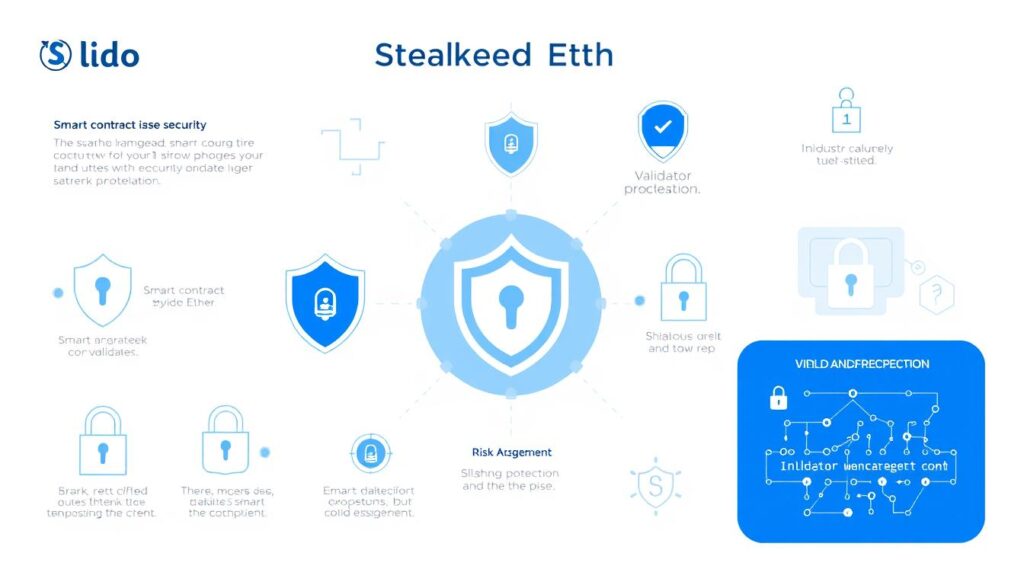
Advantages
- Liquidity while earning staking rewards
- No minimum staking requirement
- Simplified staking process
- Diversified validator risk
- Integration with DeFi ecosystem
- DAO governance structure
Risks
- Smart contract vulnerabilities
- Potential for depegging from ETH
- Validator slashing risks
- Regulatory uncertainty
- Centralization concerns
- Market liquidity risks during stress periods
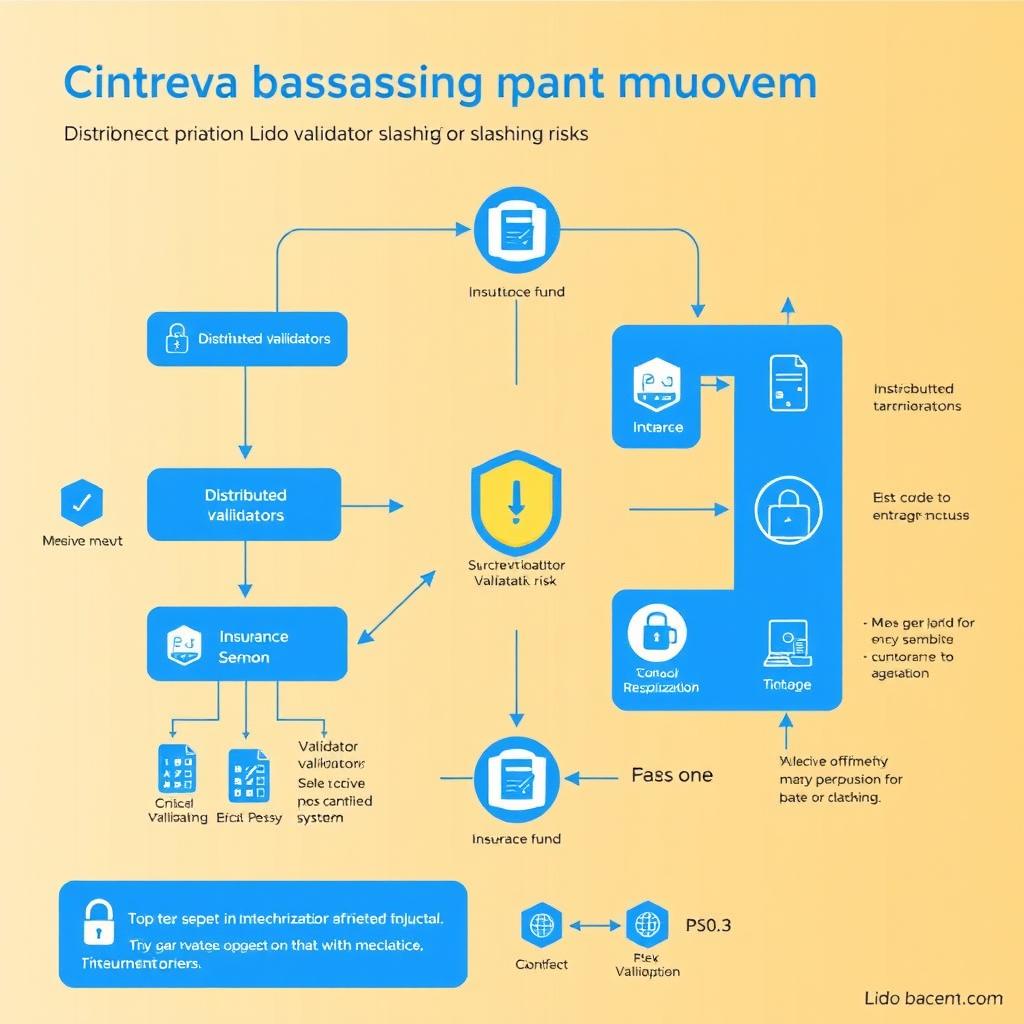
Slashing Protection
Slashing is a penalty mechanism in Ethereum’s proof-of-stake system that can result in validators losing a portion of their staked ETH for malicious behavior or downtime. Lido implements several measures to protect users:
- Distributed Validators: Risk spread across multiple professional validators
- Insurance Fund: Coverage for potential slashing events
- Operator Selection: Rigorous vetting of node operators
- Performance Monitoring: Continuous oversight of validator performance
Regulatory Outlook
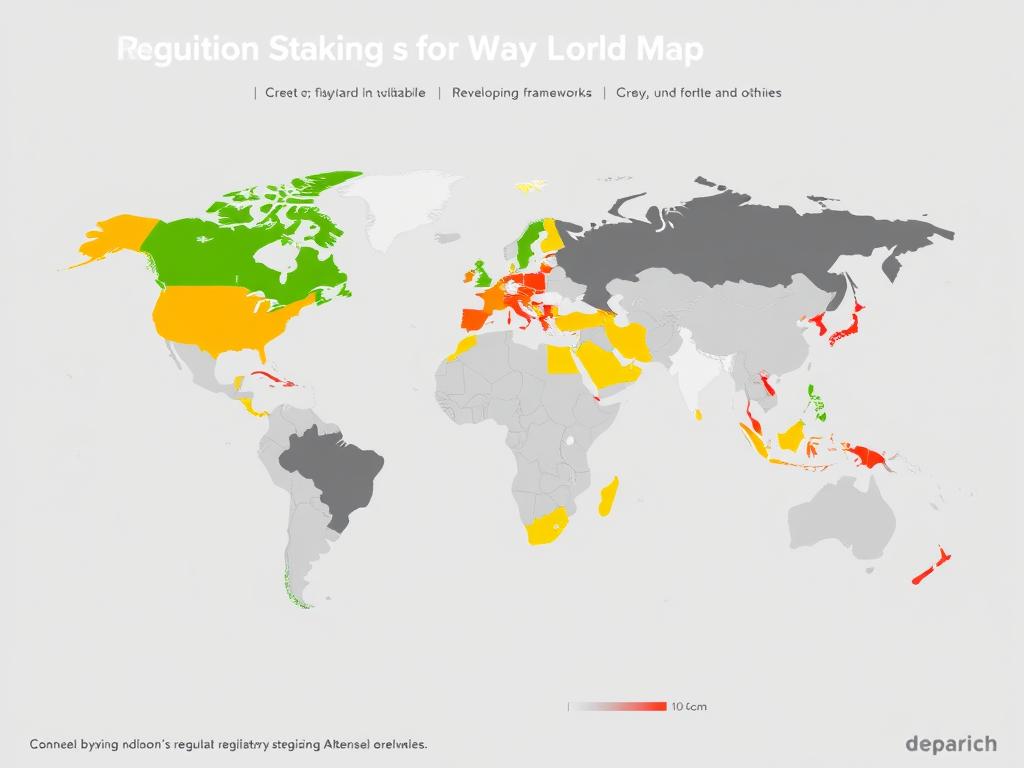
The regulatory landscape for liquid staking derivatives like stETH continues to evolve. Key considerations include:
- Securities Classification: Ongoing debate about whether liquid staking tokens constitute securities
- Centralization Concerns: Regulatory focus on concentration of staked ETH
- Compliance Measures: Lido DAO’s efforts to maintain regulatory compliance
- Jurisdictional Differences: Varying approaches to regulation across different countries
stETH Reward Calculator
Estimate your potential staking rewards with this simple calculator. Enter the amount of ETH you plan to stake to see projected returns.
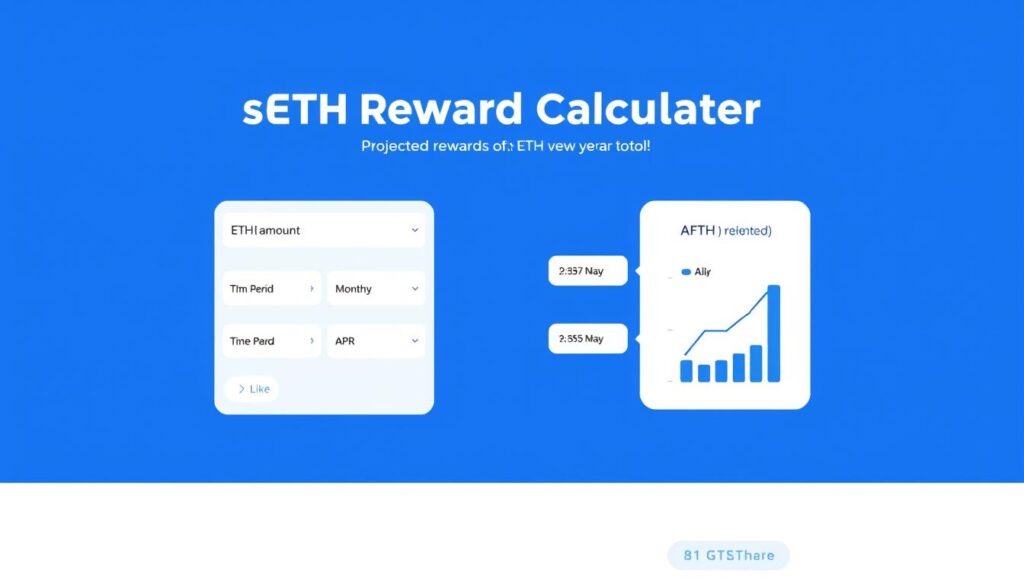
| Period | Initial Investment | Estimated Rewards | Total Value |
| Daily | 10 ETH | 0.001 ETH | 10.001 ETH |
| Monthly | 10 ETH | 0.031 ETH | 10.031 ETH |
| Yearly | 10 ETH | 0.380 ETH | 10.380 ETH |
Start earning staking rewards today
Join thousands of users already earning passive income on their ETH holdings with Lido.
Frequently Asked Questions
What is the minimum amount I can stake with Lido?
There is no minimum amount required to stake ETH with Lido. Unlike traditional Ethereum staking which requires 32 ETH, you can stake any amount of ETH through Lido and receive the equivalent in stETH tokens.
Can I unstake stETH immediately?
You have two options to exit your stETH position: 1) Trade stETH for ETH on exchanges like Curve or Uniswap, which is immediate but subject to market prices and potential slippage; or 2) Use Lido’s withdrawal queue, which returns your original ETH but may take 5-7 days depending on network conditions.
How are staking rewards distributed?
Staking rewards are automatically reflected in your stETH balance through a daily rebase mechanism. Your stETH balance increases proportionally to the staking rewards earned by the protocol, without requiring any action on your part.
Is stETH always equal to 1 ETH?
While stETH is designed to be backed 1:1 by staked ETH, its market price can fluctuate based on supply and demand. During periods of market stress, stETH has traded at discounts to ETH. However, the underlying claim to staked ETH plus rewards remains intact regardless of market price.
What happens if validators get slashed?
Lido implements several protective measures against slashing risks. The protocol uses a diversified set of professional validators and maintains an insurance fund to cover potential slashing events. This distributed approach minimizes the impact of any single validator being slashed.
Conclusion: Is Lido Staked Ether Right for You?
Lido Staked Ether (stETH) represents a significant innovation in the Ethereum ecosystem, allowing users to earn staking rewards while maintaining liquidity. With its dominant market position, deep liquidity, and integration across the DeFi landscape, stETH has established itself as the leading liquid staking solution.
Key Takeaways:
- stETH allows you to earn staking rewards without locking up your ETH
- Daily rebasing automatically increases your token balance
- No minimum staking requirement, unlike traditional staking
- Deep liquidity across both DEXs and CEXs
- Consider potential risks including smart contract vulnerabilities and regulatory changes
As with any investment, it’s important to conduct your own research and consider your risk tolerance before staking with Lido. For those looking to participate in Ethereum’s proof-of-stake ecosystem while maintaining flexibility, stETH offers a compelling solution that balances yield generation with liquidity needs.
Ready to start your staking journey?
Join the thousands of users already earning passive income through Lido Staked Ether.
Risk Disclaimer: Cryptocurrency investments are subject to market risks. Past performance does not guarantee future results. stETH experienced a 6.5% depeg during the 2022 Merge volatility. Always conduct your own research and consider your risk tolerance before investing.
Data Freshness: Prices and statistics updated as of June 2024. Current APR: 3.8% (variable).

